
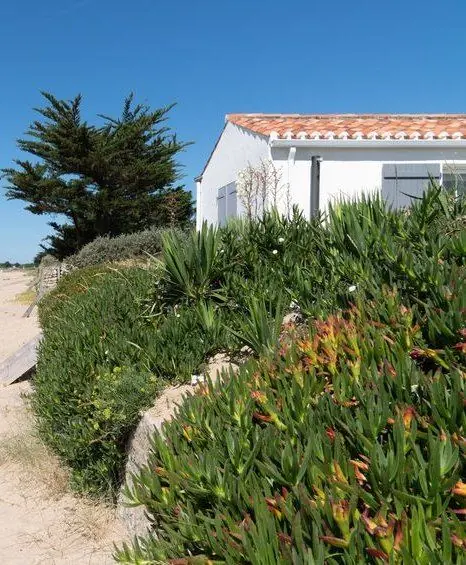
The season is over, the shutters are closed and your house in Saint-Gilles-Croix-de-Vie, Saint-Hilaire-de-Riez or Les Sables-d'Olonne will stand empty for several months. This is when a second home is most exposed to break-ins, and if you live in the UK or elsewhere, you may not hear about a problem for weeks. If squatters do move in, it is slow, stressful and costly to sort out. The good news: French law has protected owners much better since 2023, and a few simple habits make a real difference.
What French law says since 2023
Law no. 2023-668 of 27 July 2023 "to protect homes against unlawful occupation", known in France as the loi anti-squat, toughened penalties and sped up procedures.
| Offence | Maximum penalty |
|---|---|
| Entering someone's home by breaking in, threats or deception | 3 years in prison and a €45,000 fine |
| Staying there without any right | 3 years in prison and a €45,000 fine |
| Damaging the property | 2 years in prison and a €30,000 fine |
| Promoting squatting (encouraging it or explaining how) | €3,750 fine |
Three points matter most for second-home owners:
- Your furnished second home counts as a home (domicile). Since a law of 7 December 2020 (the "ASAP" law), the fast-track procedure through the prefect applies to a person's home "whether or not it is their main residence".
- The winter truce does not protect squatters. France's trêve hivernale generally runs from 1 November to 31 March, but squatters can be removed at any time of year.
- Holiday lets are covered too. According to Service-Public.fr, the official French government information site, booking a furnished holiday let and refusing to leave at the end of the stay is treated as squatting.
On the other hand, a tenant who stays on after the end of a lease is not a squatter: that is a different procedure, through the courts.
If it happens: what to do
Rule number one: never remove the occupants yourself. Changing the locks, cutting off water or power, or putting their belongings outside is illegal in France and can lead to proceedings against you. You must go through the official procedure.
The fast-track administrative procedure works like this:
- File a complaint for unlawful entry into a home (violation de domicile) with the local gendarmerie or police station.
- Prove the property is your home: title deed, property tax notice (taxe foncière), water or electricity bills, a statement from a neighbour. For a holiday let, add your registration number and the rental agreement.
- Have the occupation officially recorded by a police officer, the mayor or a commissaire de justice (the French equivalent of a bailiff).
- Ask the prefect (here, the Préfet de la Vendée) to serve the occupants with formal notice to leave. A lawyer can draft the request for you.
The prefect then has 48 hours to decide. If the request is accepted, the formal notice gives the occupants at least 24 hours to leave a home; it is served on them and posted at the town hall and on the property. If they stay, the prefect must have them removed by the police or gendarmerie without delay. Any refusal must be justified.
If you cannot get to your papers because the house is occupied, the prefect must ask the tax authorities, within 72 hours, to confirm who owns it.
The court route remains available, especially if the fast-track procedure does not succeed: a lawyer applies to the judge, then a commissaire de justice enforces the decision. It takes longer.
Prevention: the steps that matter
Most break-ins target houses that look abandoned. So the aim is simple: make yours look looked-after, and make sure you hear quickly if something is wrong.
- Have someone call in regularly. Regular visits mean a forced lock, a broken pane or signs of entry are spotted, and dealt with, within days rather than months.
- Have your post collected or redirected: an overflowing letterbox is a giveaway.
- Keep the outside tidy: garden, hedges, leaves piling up at the door. A neglected plot draws attention.
- Check every opening before you leave: doors, windows, shutters, garden gate, shed, garage access. Remember cellar vents and roof windows.
- Equip the house if needed: good locks, an alarm, motion-sensor outdoor lighting, a timer switch for a lamp in the evening.
- Tell a trusted neighbour and leave a number where you (or the person looking after the house) can be reached.
- Don't announce your absence on social media.
- Ask about "Opération tranquillité vacances": the French police or gendarmerie can patrol past a home during a long absence. You can register online or in person up to 45 days before you leave; check with the local gendarmerie whether it applies to your second home.
Documents to keep away from the house
If squatters move in, everything goes faster if you can prove your rights straight away. Keep copies at your main home, or scanned:
- your title deed or the notary's certificate of ownership (attestation de propriété);
- your latest taxe foncière notice (and second-home council tax, taxe d'habitation sur les résidences secondaires);
- recent water, electricity or internet bills for the property;
- your home insurance policy;
- dated photos of the inside, which also help if there is damage;
- for a holiday let: your registration number and rental agreements.
What about insurance?
Re-read your home insurance policy before winter. Some policies set specific conditions for homes left empty for several months (shutters closed, water turned off, a number of days of vacancy after which some cover is limited). If in doubt, ask your insurer what is covered and what they expect from you.
La Conciergerie de Vendée looks after your house while you are away
At La Conciergerie de Vendée, we provide year-round care for second homes in Saint-Gilles-Croix-de-Vie and the neighbouring towns: regular inspection visits (doors, windows, signs of intrusion, leaks, damp, outside areas), a check after storms and a report with photos after every visit. If we spot a problem, you hear from us straight away and we help you organise what comes next. We speak English.
Contact us to book a free initial assessment visit.
This article gives general information, up to date as of 5 November 2026. It is not legal advice: if your property is occupied, contact the gendarmerie, a lawyer or a commissaire de justice.
Sources: Service-Public.fr – What to do when squatters occupy housing (checked 20 August 2026) · Légifrance – Law no. 2023-668 of 27 July 2023 (in French) · French Gendarmerie (CREOGN) – Note on the anti-squatting law (in French) · French Ministry of the Interior – What to do if my home is squatted (in French) · Service-Public.fr – Operation Holiday Tranquility (OTV)